Various twists and turns by govt post-demonetisation prove that it has been tall order for the PM

The infra-major going belly up cracked open some major flaws in the system - the most evident being weak corporate governance and how layers of corporate structures could be formed adding to the opaqueness of the group.
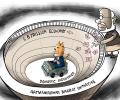
'The first year of the Modi government's second term has laid the roadmap for the future and we will embark on it with gusto,' promises Gopal Krishna Agrawal, the BJP's national spokesperson on economic affairs.

'Clearly, the depositors of cooperative banks need the maximum protection.'
The three companies for sale are Reliance Communications, Reliance Telecom and Reliance Infratel.

The incoming government will have to encourage private investments, bring down cost of capital

The senior Congress leader also said over 90 per cent of jobs are in the SME sector which requires an urgent push to boost the economy.

With Indian infrastructure companies burdened with debt, global PE funds and developers sense an opportunity to buy the airports cheap
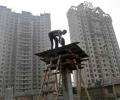
If the projections come true, then India would regain the tag of the fastest growing major economy of the world, crossing China with more than 0.7 percentage point in 2018 and an impressive 1.2 percentage point growth lead in 2019.
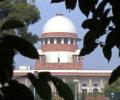
From Rafale relief to heat on realtors, 10 landmark Supreme Court judgments in 2018.

Heading to the third year, will Urjit Patel be busy firefighting a currency crisis? Almost no governor of the RBI managed to evade it and Patel perhaps knows it.

The most pressing issue facing the financial sector is the rising stock of non-performing assets in the banking system

He said while the previous UPA government hid the bad loans, his government has properly recognised them and brought tough laws to deal with defaults and recovery money.

Top 5 losers include Infosys, TCS, ITC, M&M and HUL.

Aggressive rate hikes by the US Federal Reserve could result in a flight of capital from emerging markets like India, says B Gopkumar, chief executive officer, Reliance Securities.
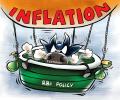
'Election years tend to see high government expenditure on unproductive schemes, though that money sloshing around can boost private consumption.' 'Again, it can mean higher inflation,' explains Devangshu Datta.

The department of economic affairs is said to be in discussions with various probe agencies, including the income tax department and the Enforcement Directorate, and bankers in drafting the final rules.

'Every few days, I wake up with a sense of restlessness that time is running out'... 'We have created a due process for stressed assets to resolve, but there is no concrete plan in place for public sector bank balance sheets,' says RBI Deputy Governor Viral Acharya.

In a proposal to FinMin, the Banks Board Bureau suggests asset sales to PSUs within a deadline to recover bad loans.

IMF believes it is mostly cyclical, not structural, but because of the financial sector issues, recovery will be not be quick. IMF said, it saw an opportunity with the strong mandate of the new government to reinvigorate the reform agenda to boost inclusive and sustainable growth.

'I hope the trend is sustainable and that economic activity accelerates going forward.'
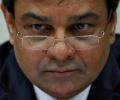
RBI has cited at least 10 areas where it has no control over PSBs.
The 'bad bank' -- which will help banks clear their balance sheets by transferring the NPAs to special purpose vehicles -- has been one of the most debated ideas for stressed asset resolution.

Some of the key proposals of the agenda relate to transforming the banking sector, addressing agrarian distress, countering hate crimes and discrimination, and spurring employment generation.

A way out of the economic slump is to revisit the template of 15 years ago and follow its constituents, recommends Ajay Shah.

Jaitley slammed lack of ethics in certain sections of businesses and said multiple layers of auditing system chose to either look the other way or did a casual job.

The decision to do away with Rs 500 and Rs 1,000 notes accelerated the slowdown in economic activity with growth averaging 6.8 per cent in the seven quarters after it, as against an average of 8 per cent in the six quarters preceding it, says former chief economic advisor Arvind Subramanian.
The economists, who were surveyed, also felt it will take time for banks to make any further reduction in deposit rates

"I invite each one of you to become a partner in India's growth story. And once again assure you of our wholehearted support."

Modi said the ease of doing business ranking improved because the government initiated reforms to end difficulties in the lives of people.

A combination of demonetisation, a poorly and hurriedly implemented GST, and more recently the "botched up" lockdown of the economy to control the spread of Covid has brought the economy to its knees.

Indian bankers are fearful that going out of their way to save Jet could lead to subsequent harassment from investigative agencies.

Without bringing sound governance and technical capabilities into the RBI's work, injecting new money sets the stage for a next wave of bad behaviour by banks, warns Ajay Shah.
The banking sector's credibility is on thin ice. Unless the government takes strict steps, things could get worse.

Stating that a weak fiscal position continues to constrain India's sovereign ratings, Fitch said the next government's medium-term fiscal policy will be of particular importance from a rating perspective.
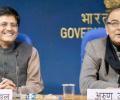
While Arun Jaitley remains part of the decision making process, Piyush Goyal, who was given additional charge on May 14, attends cabinet meetings and takes the day-to-day decisions.

Delivering a public speech hours after the RBI launched a rescue act for Yes Bank on March 6, Governor Shaktikanta Das reiterated the RBI's affirmation to do whatever was needed to combat the coronavirus impact. On that day, India had only one confirmed COVID-19 infection, the World Health Organisation was five days off from declaring it as a pandemic and the financially debilitating lockdowns were not even on the horizon. Das' promise on efforts to mitigate COVID-19 impact appeared as a footnote in news reports from the event.

The NCLAT said the RBI cannot restrict it from prohibiting banks from 'asset classfication' and observed that any change in this order would upset the entire resolution process of the IL&FS

He said the country has witnessed a journey from indecisiveness to clarity and decisiveness.

'When there is unlocking, there is demand revival.' 'This is going to be the main growth engine in this kind of an economic scenario.'
